Engender blog
All of Engender’s latest news. Reports, reviews, books, articles, and information from across Scotland’s women’s sector.
We would love to hear from other feminists around Scotland. Check out our guidelines for more information on how you can blog for us.
International Women's Day - Let's #makeworkvisible
Happy International Women's Day!
Not a lot of people know that International Women's Day used to be calling International Working Women's Day.
But what does being a working woman actually mean? Governments and international bodies tend to recognise work as something you get paid for. You offer your services, skills and time, and your receive a wage for it. This wage then gets spent on rent, bills, food and goods, and paying other people for services, and so the economy functions. This is what's known as the 'formal economy'. Things which are deemed not to contribute to the formal economy are normally counted as 'leisure'.
There are huge problems with the formal economy for women – we still (in 2015!) have a pay gap which means women earn 13% less than men as full time workers and 32% less than men part-time. Women are more likely to be in precarious and low paid positions. We are less likely to become CEO (in fact, if you're a man named John, James, William or Robert you're more likely to be CEO than a woman!) and are still discriminated against in the workplace.
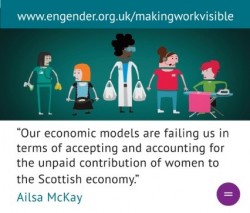
But perhaps the biggest problem with the 'formal economy' is that it doesn't recognise the value (economic or otherwise) of any work which doesn't fit into that rigid pattern of work-earn-spend. Work such as raising children, caring for relatives, housework and contributing to communities are not counted in budgets and figures such as GDP (Gross Domestic Product – the way which most governments measure economic activity), even though they clearly contribute to the wellbeing of the country. This sort of work is still predominantly done by women – 62% of unpaid care-givers are women, the majority of childcare is still undertaken by women, and the time men spend doing housework has only increased at a rate of one minute per day per year since the '70s!
Watch our brilliant new film 'Marginal-eyes' which highlights the problem of undervalued and unseen women's work!
Please help us spread the word about this important issue on Twitter and Facebook using the hashtag #makeworkvisible. We also have graphics highlighting the issue which can be found on our our Flickr page.
Cracks in the Glass Ceiling or Just a Trick of the Light? New Report on Women on Boards

What is this report about?
As part of the European Women’s Lobby’s Beijing+20 focus month on ‘Women in Decision-Making’, February sees the launch of the EWL’s latest report on women on boards, entitled ‘Women on Boards in Europe: Second Progress Report. Cracks in the glass ceiling or just a trick of the light?’
This Second Progress Report is part of the EWL’s ongoing work to ensure that parity at all levels of decision-making becomes reality. It tracks developments, progress, and stagnation regarding women on company boards in 11 European countries, including the United Kingdom, since the EWL’s first Progress Report on Women on Boards in 2012 – which was awarded the European Public Affairs Award for Report of the Year 2012.
What’s happening in Europe regarding women on boards?
Since the 2012 report, and ongoing campaigning in favour of binding legislation regarding gender parity on company boards across the EU, an EU Directive which aims to attain a 40% gender balance on non-executive boards in large, publicly listed companies across the EU has been proposed and is currently under consideration by the Council. Commissioner for Gender Equality VÄ›ra Jourová has committed to seeing the Directive passed within 2015.
We therefore find ourselves at a key moment to reflect on the developments in this area since 2012 across Europe and to learn from this reflection and analysis in order to best inform current and future policy-making in this area.
What has the United Kingdom done to crack the glass ceiling since 2012?
Positive steps
- The Davies Review in 2011 has led to good progress with many companies voluntarily committing to raising the proportion of women on company boards
- Among FTSE 100[1] companies, women’s representation on boards is at 22.8% (October 2014), up from 12.5% in 2011 and every FTSE 100 company has at least one woman on their board[2]
- Reaching the target of 25% of women on boards by 2015 is seen as essential to ‘prove […] that British business [can] fix this on their own’ and in order to avoid legislative quotas at the EU or national level[3]
Challenges
- While as a group, the FTSE 100 companies are on track to meet the 25% target in 2015, success is concentrated in a few companies and there are still 61 FTSE 100 companies who fall short of this target[4]
- Once again, we see progress is heavily weighted in non-executive directorships – 27.9% of non-executive directorships among FTSE 100 companies are held by women, in comparison to 8.4% of executive directorships[5]
- When we look at smaller companies, the situation is far worse. Among the FTSE 250 group[6], only 17.4% of board members are female and there are 29 companies with no female directors at all[7]
The way forward
The report makes five evidence-based recommendations, which should be taken into account as the future policy landscape regarding women in decision-making at the EU level and the national level is determined:
- Binding measures must apply to both executive and non-executive boards
- Further action is needed to increase proportion of female CEOs
- Effective measures require regular monitoring and intermediary targets
- Measures must be enforced with firm sanctions
- Quotas must be introduced as part of a comprehensive policy package that seeks to address the fundamental causes of women’s underrepresentation in economic decision-making
Gender parity in positions of economic power is of vital importance when it comes to justice, democracy and sustainable growth. Diverse decision-makers and leaders better represent, better understand, and better respond to the desires and needs of women and men in their diversity – and will be more open to cultivating a new style of leadership which will lead to much-needed transformative social change. As an important step forward towards a progressive, sustainable and inclusive Europe, the European Women’s Lobby demands the adoption and implementation of the current proposed EU Directive on women on boards without further delay. Moreover, we strongly encourage national governments to go above and beyond its requirements and to implement stronger measures to achieve gender parity at all levels of decision-making.
You can see the report with full references, and information on other countries, here.
Guest Post: Plan F for feminist: An alternative to the UK government's economic 'Plan A'.
 Guest blog: By Angela O'Hagan.
As Frances O’Grady argues in the foreword to the CLASS publication “Election 2015: What’s at stake for work, pay and unions?” the forthcoming election is “a chance to reject a broken economic system”. That encapsulates the arguments from a feminist economics and feminist political analysis of the current economic system and the policy responses of the UK government that are increasingly harmful to women’s wellbeing and their economic and social autonomy.
Statement to the Joint Ministerial Working Group on Welfare
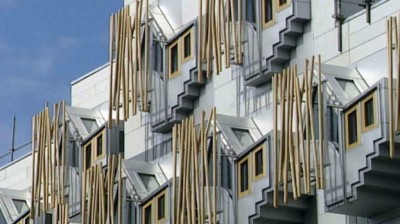
Today we are publishing a joint statement to the new Joint Ministerial Group on Welfare, which was established by the UK Government command paper and draft clauses on further devolution published in January.
Welcome to Engender, Alys!
Alys has joined Engender as our new Communications and Engagement Officer, where she’ll be sending out mailings, running events, and making sure you’re up to speed with everything that’s happening in the wonderful world of gender equality campaigning! Before joining Engender she worked with Jubilee Scotland on the campaign to cancel global debt and at People & Planet helping students campaign against climate change. She studied at Cardiff University, where she was women’s officer at the student union, and is excited to be getting her teeth back into feminist campaigning again! You can contact Alys to chat about anything to do with her role.
We’re also excited to welcome our new officers who will guide our board of trustees and support the staff team; Nina Murray is our new Convener, Emily Thomson is taking on the role of Vice Convener and we’re delighted that Wendy Davies is staying on as our Treasurer and Company Secretary. You can read more about all of Engender’s board members on our website.
 RSS
RSSDownloads
 Engender Briefing: Pension Credit Entitlement Changes
From 15 May 2019, new changes will be introduced which will require couples where one partner has reached state pension age and one has not (‘mixed age couples’) to claim universal credit (UC) instead of Pension Credit.
Engender Briefing: Pension Credit Entitlement Changes
From 15 May 2019, new changes will be introduced which will require couples where one partner has reached state pension age and one has not (‘mixed age couples’) to claim universal credit (UC) instead of Pension Credit.
 Engender Parliamentary Briefing: Condemnation of Misogyny, Racism, Harassment and Sexism
Engender welcomes this Scottish Parliament Debate on Condemnation of Misogyny, Racism, Harassment and Sexism and the opportunity to raise awareness of the ways in which women in Scotland’s inequality contributes to gender-based violence.
Engender Parliamentary Briefing: Condemnation of Misogyny, Racism, Harassment and Sexism
Engender welcomes this Scottish Parliament Debate on Condemnation of Misogyny, Racism, Harassment and Sexism and the opportunity to raise awareness of the ways in which women in Scotland’s inequality contributes to gender-based violence.
 Gender Matters in Social Security: Individual Payments of Universal Credit
A paper calling on the Scottish Government to automatically split payments of Universal Credit between couples, once this power is devolved to the Scottish Parliament.
Gender Matters in Social Security: Individual Payments of Universal Credit
A paper calling on the Scottish Government to automatically split payments of Universal Credit between couples, once this power is devolved to the Scottish Parliament.
 Gender Matters Manifesto: Twenty for 2016
This manifesto sets out measures that, with political will, can be taken over the next parliamentary term in pursuit of these goals.
Gender Matters Manifesto: Twenty for 2016
This manifesto sets out measures that, with political will, can be taken over the next parliamentary term in pursuit of these goals.
 Scottish NGO Briefing for UN Special Rapporteur on Violence Against Women
Joint briefing paper for the UN Rapporteur on Violence Against Women.
Scottish NGO Briefing for UN Special Rapporteur on Violence Against Women
Joint briefing paper for the UN Rapporteur on Violence Against Women.

Newsletter
Sign up to receive our newsletter here:
Sign up to our mailing list
Receive key feminist updates direct to your inbox: