Engender blog
All of Engender’s latest news. Reports, reviews, books, articles, and information from across Scotland’s women’s sector.
We would love to hear from other feminists around Scotland. Check out our guidelines for more information on how you can blog for us.
Women pay the price in an age of crisis
It is outrageous that women still do not have equal access to resources in modern Scotland. Women’s financial inequality has been accepted by our politicians and by our society more broadly. Enough is enough.
Today, we launch our new series, Confronting Women’s Poverty, outlining our 5-point plan of action to eliminate the gender income gap and prevent destitution for women and their children.
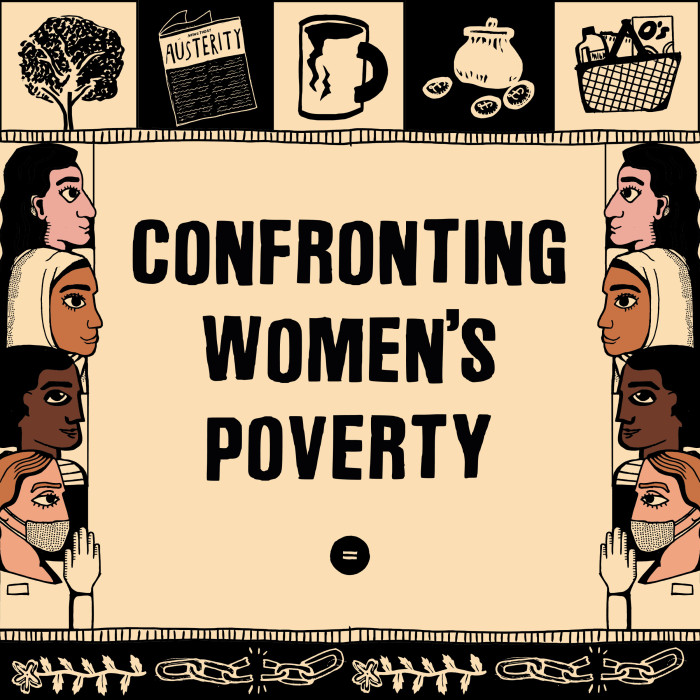
Marginalised women in Scotland are living in worsening poverty and financial insecurity.
Engender has worked for decades on issues affecting women like social security, access to housing, childcare, and unpaid care, all of which are linked to women’s poverty and financial inequality. Some of the drivers of women’s poverty include:
-
 Women tend to manage limited household budgets, often acting as ‘shock absorbers’ of poverty by going without themselves.
-
Women have less access to well-paid and secure work, occupational pensions and savings than men.
-
Domestic abuse and other forms of violence against women creates barriers to financial independence and wider access to resources for women.
-
Women are the majority of lone parents and primary caregivers for children, meaning their poverty is deeply linked with child poverty.
Today we launch Confronting Women’s Poverty, to share research and recommendations for an effective response to tackling women’s poverty in an age of crisis.
Our first paper breaks down what lies behind women’s persistent financial inequality and presents a 5-point plan to eliminate the income gap for women.
 Crisis after crisis: women pay the price
The ‘gender income gap’ refers to women having less access to financial resources and security than men. Progress to close this gap has been undermined by successive crises in recent years, including austerity, the Covid-19 pandemic, and the cost of living crisis. Women have shouldered the burden of these crises, with disabled women, women of colour, migrant women, lone parents and unpaid carers are among those most acutely harmed.
While the impacts of these emergencies on women - and the critical role that women have played in protecting and supporting their communities - have been well documented, the Scottish Government continues to fail women. We need decision-makers to take action to disrupt the broad political and social acceptance of financial inequality between women and men.
Breaking the cycle: taking action in an age of crisis
 Women’s poverty is the consequence of ingrained, systemic failures that uphold and drive forward gender-based discrimination, but it is also preventable. A combination of ineffective policy, decision-making, and crisis responses have entrenched women’s poverty. Commitments to women’s equality and rights are continually deprioritised, forcing more women into greater financial precarity, deepening poverty, and wider harms.
The gender income gap has been normalised in Scotland, but it is a political choice that guarantees harm to women and their children. To close it, decision-makers need to do much more to better understand and respond to the root causes of women’s financial inequality.
Confronting Women’s Poverty offers the new Scottish Government and Scottish Parliament a 5 point plan of action to eliminate the gender income gap and prevent destitution for women and their children.
We call for:
1. A Taskforce on Women’s Poverty
2. A Women’s Equality Fund - Crisis Support for Marginalised Women
3. A Minimum Income Guarantee for Unpaid Carers
4. A Roadmap to Universal Childcare for All
5. Overhaul of the Public Sector Equality Duty
Find our Confronting Women’s Poverty series here.
Guest Blog: How the rising cost of living is affecting older women in Scotland
In this guest blog, Louise Brady from Independent Age shares what we can learn from the Older People’s Economic Wellbeing Index, and the need for change to tackle the impact on women.
While media and political attention on the high cost of living seems to come and go, the crisis hasn’t gone anywhere. Older people across Scotland, particularly older women, continue to be affected at scale.
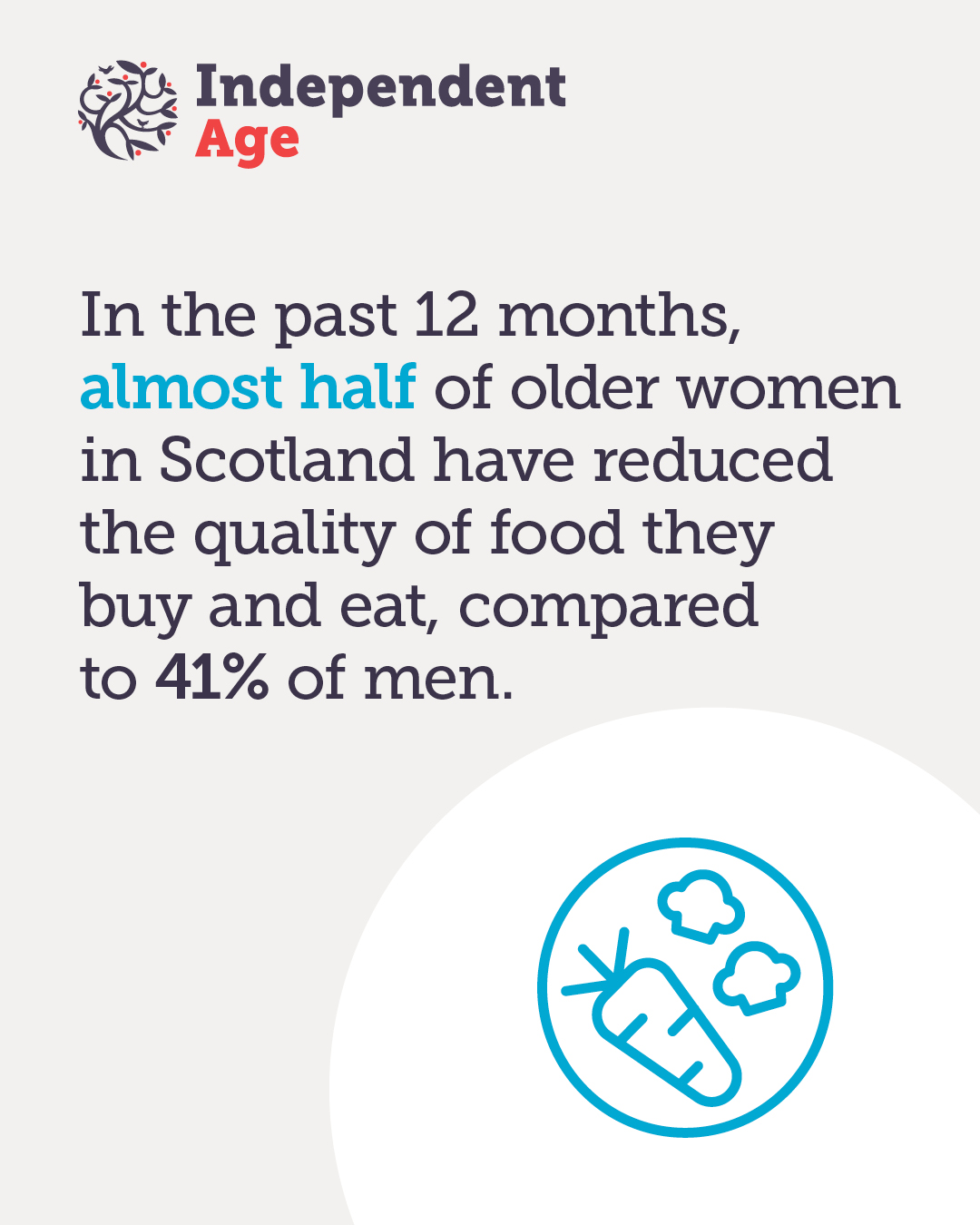 In 2026, almost a third of older women skipped meals at some point, half reduced the quality of food they bought, and 6 in 10 cut back on their heating – all because of financial difficulties.
These shocking statistics come from the second edition of Independent Age’s annual Older People’s Economic Wellbeing Index, where we track the income, costs, housing issues, quality of life and feelings of political representation experienced by people over State Pension age in Scotland.
The State Pension as the sole source of income
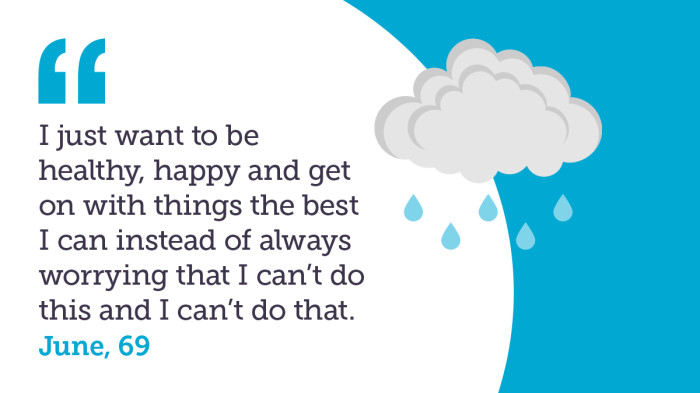
Our Index also shares the stories of older people, like June who is 69 and lives by herself. June shares the impact that rising supermarket costs have on whether she can eat healthy food, and how she often stocks up on instant noodles as a back-up option. She is behind on paying bills and is in arrears with rent and Council Tax. June doesn’t have any savings and, because she’s not eligible for Pension Credit, the State Pension is her only income. Behind every number in the Index are real people like June.
And it’s not uncommon for older people in Scotland - including June - to live on the State Pension as their only income, with women more likely to be in this position. The 2026 Index found that while over a third of older women don’t receive any income from workplace pensions, this drops to a quarter of men. Women are also less likely to receive any income from personal pensions, with less than 1 in 5 doing so compared to more than 1 in 4 men.
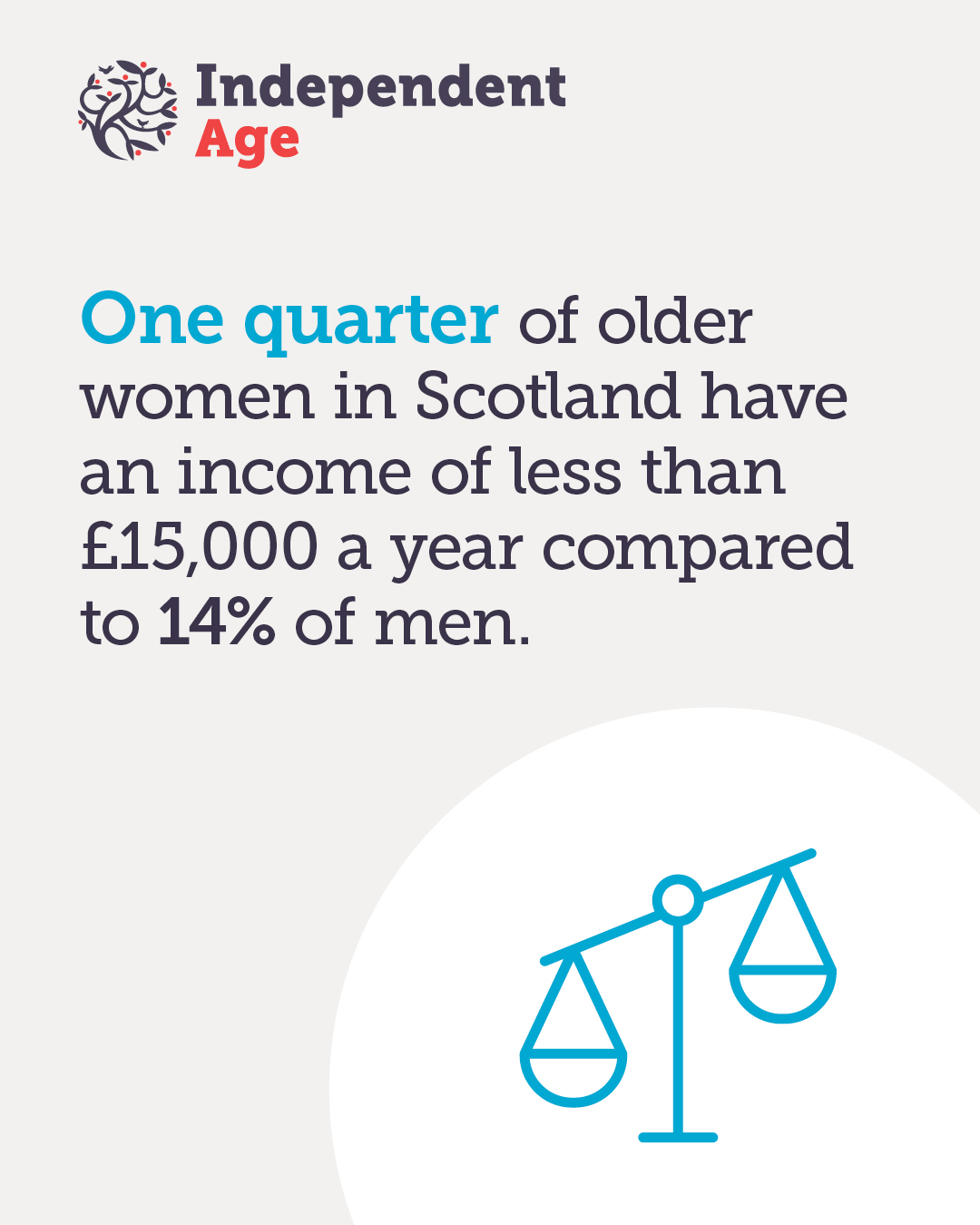
When it comes to the income levels of older women, the 2026 Index found 1 in 4 older women live on an income of less than £15,000 a year, compared to 1 in 7 men.
You can read more about why women experience pension inequality in this previous blog, which also discusses the inaugural findings of this research series.
 Millions of pounds are going unpaid
There is more to be done to ensure that the systems we have in place are accessible to people who are above current eligibility thresholds, but who are on a low income, like June. We also know that there is much more that both the UK and Scottish Governments could be doing to improve access to and take-up of payments like Pension Credit and the winter heating payments.
Later this year, the Scottish Government will publish its refreshed strategy on how it will increase take-up of devolved social security payments. It’s welcome that Scotland has such a strategy. The equivalent doesn’t exist at a UK level. But as the figures show, there is much more to do. Currently over £150 million in Pension Credit goes unpaid and unclaimed every year – it’s vital to note Pension Credit is used to decide on eligibility to other payments administered by Social Security Scotland, such as Winter Heating Payment.
For Scotland’s pensioners, it’s crucial the strategy recognises the links between take-up of UK and Scottish administered payments and takes a holistic approach to increasing take-up of all payments available to older people. Later this year, we’ll publish new research that shows the scale of unpaid social security in Scotland, covering Pension Credit, Housing Benefit and Council Tax Reduction, alongside the preventative spending impacts of maximising take-up.
Next steps for reducing pensioner poverty
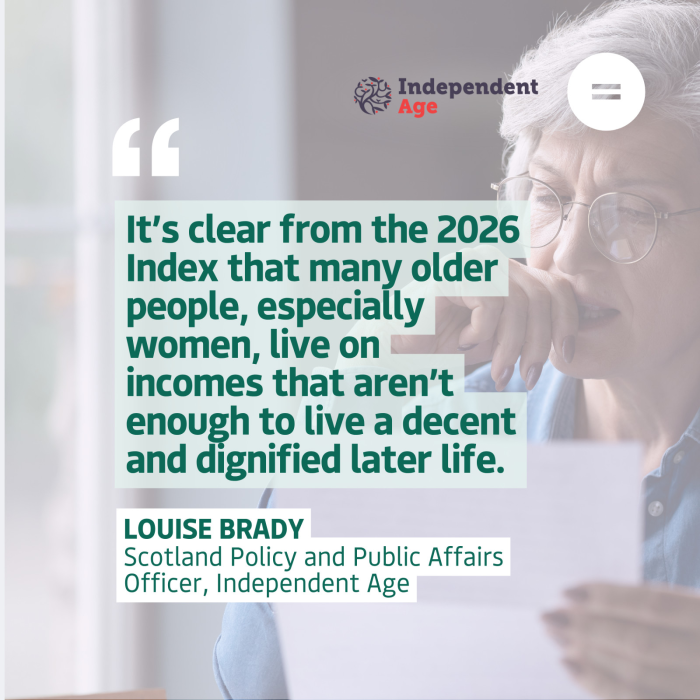
It’s clear from the 2026 Index that many older people, especially women, live on incomes that aren’t enough to live a decent and dignified later life. There are concerns about the years to come too, with just 6% of pensioners in Scotland today confident that the State Pension will cover basic living expenses in the future.
While the UK Government must ensure that the State Pension and Pension Credit are set at adequate rates, there are devolved powers that can be used to help older people who live on low incomes. For example, more financial support should be given to older carers, who often lose any additional support when they reach State Pension age. The 2026 Index shows that 1 in 5 older women provide unpaid care, and around half of this group do so for over 20 hours per week.
The urgent need for action to improve the economic wellbeing of older women in Scotland is clear. We’re calling on the Scottish Government to act on the evidence and introduce a pensioner poverty strategy in their first Programme for Government of the parliamentary session.
You can read the Older People’s Economic Wellbeing Index: Scotland 2026 from Independent Age here.
If you’re over State Pension age and struggling financially, you can find information from Independent Age on their website or you can call their Helpline on 0800 319 6789. To hear more about Independent Age’s policy and public affairs work in Scotland, please contact Scotlandpublicaffairs@independentage.org
Guest posts do not necessarily reflect the views of Engender, and all language used is the author’s own. Bloggers may have received some editorial support from Engender, and may have received a fee from our commissioning pot. We aim for our blog to reflect a range of feminist viewpoints, and offer a commissioning pot to ensure that women do not have to offer their time or words for free.
Interested in writing for the Engender blog? Find out more here.
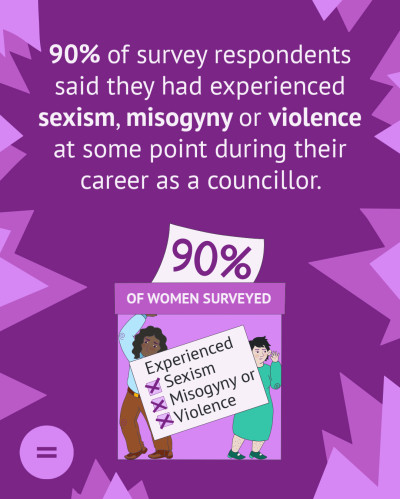
Nine in ten women councillors have experienced sexism, misogyny or violence in Scottish local politics, our new report reveals
Today, we publish our new research ‘Part of the Job?’, Women councillors’ experiences of sexism, misogyny and gender-based violence in Scottish Councils. This research exposes the endemic scale of violence against women in local politics and its serious consequences for individual women and for Scottish democracy.
This research lays bare what too many women in Scottish local politics have long known: that sexism, misogyny and gender-based violence are part of the everyday reality of being a woman councillor. This is completely unacceptable. Local councils make decisions that shape all of our lives, and women’s voices at that table are vital. We cannot afford to lose women from local politics, or to deter others from entering, because we have failed to take this seriously. With elections on the horizon, the time for urgent, systemic action is now.
Key findings
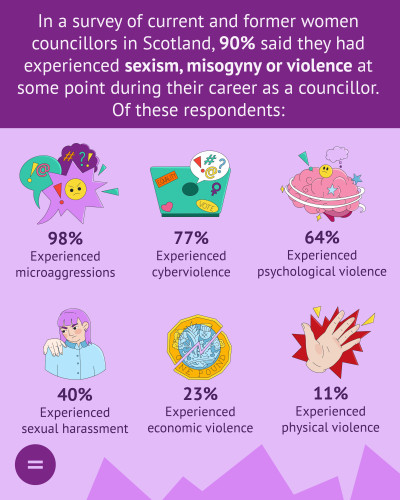
The report draws on survey responses from 59 current and former women councillors, as well as in-depth interviews with 16 participants. Among those who reported experiencing sexism, misogyny or violence:
> 98% experienced microaggressions — everyday sexist slights, snubs and insults
> 77% experienced cyberviolence, including online abuse and threats
> 64% experienced psychological violence, including threats/ character assassination
> 40% had experienced sexual harassment
> 11% had experienced physical violence
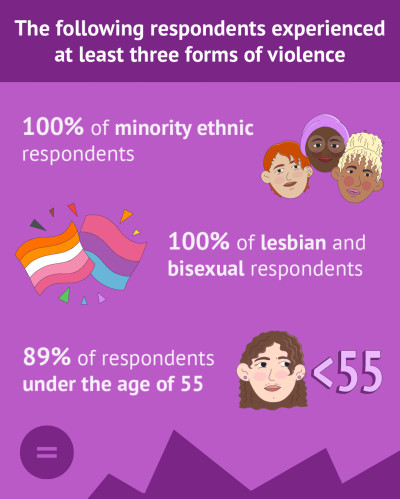
Almost three-quarters (72%) had experienced at least three different forms of violence. All minority ethnic, lesbian and bisexual respondents, and almost all (89%) of those under 55, had experienced at least three forms.
Fellow councillors, not just members of the public, were identified as the most common perpetrators, a finding that has significant implications for existing reporting procedures. Despite the scale of the problem, underreporting is widespread: 81% of those who experienced sexual harassment did not report it.
Impact on women and democracy
The research reveals how this culture of violence is directly undermining women’s participation in local democracy. Almost half (48%) of respondents said their experiences had caused them to become less vocal. A fifth said they had been excluded from decision-making. Nearly a third (30%) said they would not recommend being a councillor to other women, rising to 45% among those under the age of 55.
Women councillors described cancelling constituent surgeries due to safety concerns, withdrawing from social media, and attending council meetings online to avoid in-person contact with perpetrators. Three respondents had quit their posts entirely due to the abuse they experienced, and a further 18% decided not to stand for office again.
This matters beyond individual women’s careers: Scotland’s 32 councils deliver vital public services that disproportionately affect women’s lives, including childcare, social care and public transport. Research consistently shows that women’s participation in politics improves the quality of those services and strengthens democracy. This report makes clear that participation is being systematically undermined.
Voices from the research
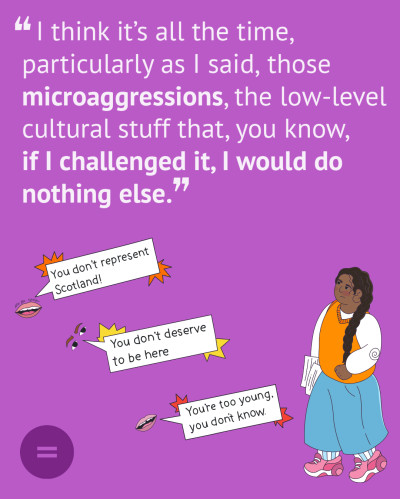
“I remember starting as a councillor it was very apparent. There were some male councillors who didn’t think you had the right to be even in the room.” - Interview participant
“I couldn’t recommend any woman to become a councillor. I couldn’t actually recommend anybody to become a councillor, but especially a woman.” - Interview participant
“... we desperately need more women in politics or this will never change but it’s hard to recommend something to people which you know will harm them.” - Survey respondent
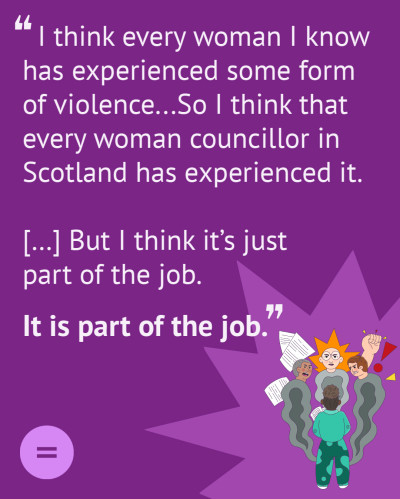
“I think every woman I know has experienced some form of violence...So I think that every woman councillor in Scotland has experienced it. I really do...But I think?it’s?just part of the job. It is part of the job.”?- Interview Participant
“But everyone just says?it’s?part of the job. And?there’s?nothing we could do. Just totally ignored it...But meanwhile,?we’re?all looking over our shoulder and looking out for it to happen.” - Interview Participant
“It happens a lot. It happens?on a daily basis.” - Interview Participant
Call to action
With Scotland’s local council elections due in 2027, we are calling for urgent and comprehensive action across government, councils, political parties and regulatory bodies. Central is our call to the Scottish Government to commission a comprehensive, independent review into the safety of women councillors in Scotland, one that examines reporting procedures, anonymous complaint mechanisms, protection from retaliation, and whether a dedicated independent body is needed to handle complaints of gender-based violence against politicians.
Other recommendations include mandatory training on violence against women for all elected members; a requirement that councils introduce standing orders explicitly prohibiting violence against women in politics; equal access for councillors to employee assistance schemes; and improved security provisions aligned with protections available to MPs and MSPs.
Invisible in Scotland’s Health System
The recently published Voluntary Health Scotland (IN)VISIBLE research report explores the complex relationship between sex, gender, and health. In this guest blog, report author Sarah Latto reflects on the findings and how we can work together to bring about systemic change.
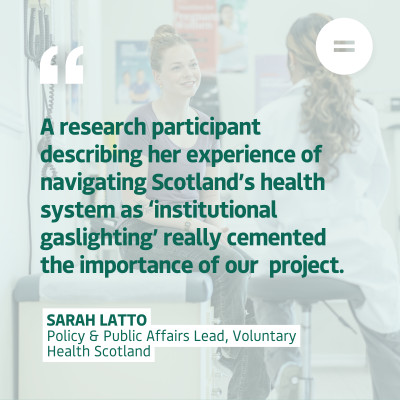
A research participant describing her experience of navigating Scotland’s health system as ‘institutional gaslighting’ really cemented the importance of our (IN)VISIBLE project. I also have personal experience of my symptoms and pain being minimised in Scotland’s health system, and this is happening to too many of us, too often.
Led by evidence and insights from over 50 representatives from Scotland’s third sector, the (IN)VISIBLE research looks at how sex and gender affect the health of all Scotland’s people, not just women. However, the report surfaces clear evidence of misogyny in Scotland’s health system that will be familiar to many Engender members.
In writing the report, I was keen to ensure that the themes were navigated sensitively and inclusively. As well as engaging with a wide range of health-specific VHS member organisations, I approached third sector organisations that have expertise in gender issues, like Engender, for their insight. I also worked closely with LGBT Health and Wellbeing and Scottish Trans to ensure that an intersectional approach was adopted throughout.
Physiological Differences
For women assigned female at birth, physiology – or biology – plays an important role in determining their health. ‘Women’s health’ is often defined by the female reproductive organs and hormones, focusing on conditions like endometriosis, adenomyosis, or menopause. However, assigned females are also more likely to develop certain neurological conditions such as ME or Functional Neurological Disorder, and experience many other health conditions differently to assigned males.
In fact, assigned females routinely have their symptoms dismissed, are misdiagnosed, or experience treatment delays because these physiological differences are not well understood by health professionals. As one participant stated, ‘women are seen as “little men”’ with treatment ‘based on the “typical” 70kg man’. This creates considerable health inequalities and can have life-threatening consequences for women.
For trans women, physiological differences lead to more complex inequalities due to the binary nature of our health system. Gender identity healthcare often creates new biological realities that aren’t well understood, and don’t align with dated NHS systems for patient data. For example, a trans woman might be eligible for breast screening as a result of hormone therapy but they may also still require prostate screening. Unfortunately, screening invitations are largely based on binary gender categories, meaning that many trans people have to proactively request screening that is appropriate to them.
Societal and Systemic Barriers 
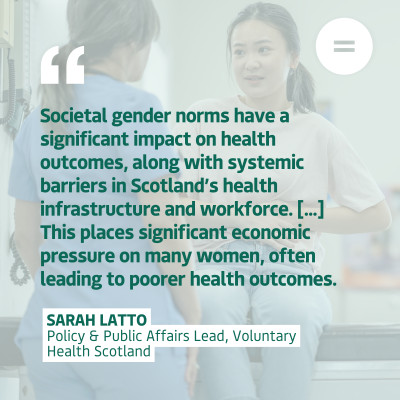
Societal gender norms have a significant impact on health outcomes, along with systemic barriers in Scotland’s health infrastructure and workforce. For example, women are more likely to provide, or be expected to provide, primary unpaid caregiving roles. Several sources in the research spoke about the burden on women in heterosexual relationships to provide their partner with a ‘good death’, with some of that pressure appearing to come from health and care workers. This places significant economic pressure on many women, often leading to poorer health outcomes. It also limits their capacity to prioritise their own health, with many unpaid carers ending up ‘missing’ from the health system.
Intersectional Inequalities
The impact of gender on health is often compounded when it intersects with other protected characteristics. VHS members shared evidence of ageism, ableism, racism and queer-phobia, often having devastating impacts on the health of women in Scotland. Women with learning disabilities are often infantilised, with some reportedly experiencing pressure to terminate pregnancies. Similarly, migrant women regularly experience discrimination in maternity services, with reports of informed consent not being adequately obtained for procedures including the provision of long-term contraception.
Bisexual women have a disproportionately high likelihood of reporting poor health outcomes, including depression, self-harm, disordered eating, and abusive relationships. Frustratingly, there is not enough evidence to understand why this is the case – a common theme when it comes to understanding intersectional health inequalities. One research participant stated that:
‘Not only do we have data gaps, but where we have data, particularly when you’re talking about disaggregated data, it is not statistically significant enough for us to base anything on it.’
So, how do we solve this?
There are six recommendations detailed in the report, all aimed at improving health experiences and outcomes by bringing about systemic change. Health policy and research need to reflect the impact of sex and gender on health, particularly where they intersect with other characteristics.
The health workforce needs to be better informed on the specific impacts, and we need to invest in dedicated systems and spaces that address common barriers. We need to empower women through public awareness campaigns – only by understanding the ways that sex and gender impact on health will we be able advocate for ourselves.
Finally, it is clear through this report that third sector organisations like VHS and Engender have a vital role to play in understanding and responding to inequalities. I urge women, and organisations that support and empower women, to read this report, share its core messages, and help us to make the invisible visible.
Sarah Latto (she/her) has been the Policy and Public Affairs at Voluntary Health Scotland since May 2025. She is passionate about social justice and a proud member of Engender. Voluntary Health Scotland are a movement for health creation, working collaboratively with their 300+ members to reduce health inequalities.
Research shows record number of women MSPs standing down ahead of election
Ahead of the upcoming Scottish Parliament elections on 7th May, today Engender is publishing our new paper exploring why women MSPs are stepping down, and what we can do to tackle this.
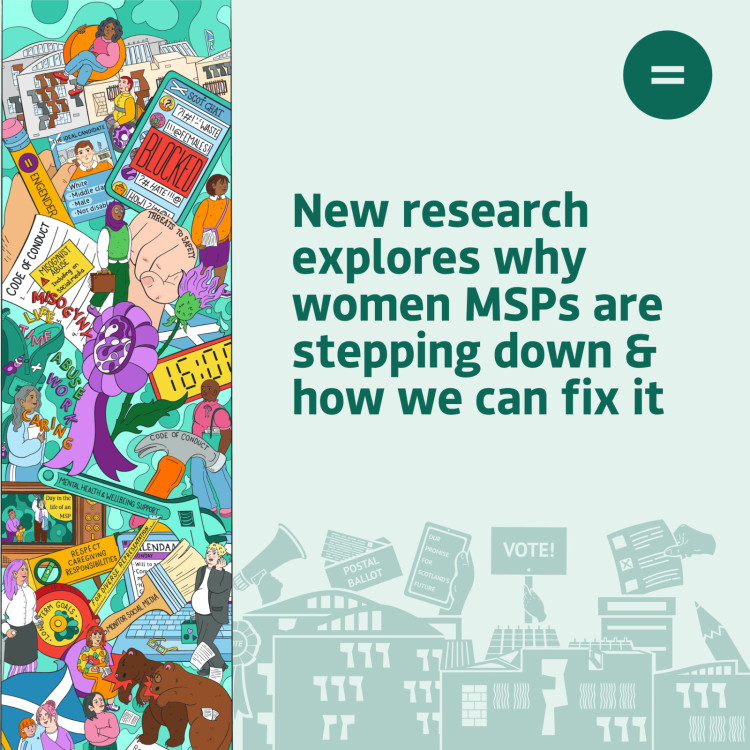
The upcoming elections are a crucial moment to ensure that our next intake of MSPs furthers women’s representation at the highest levels of decision-making, but our research shows that an unprecedented number of women MSPs are not seeking re-election.
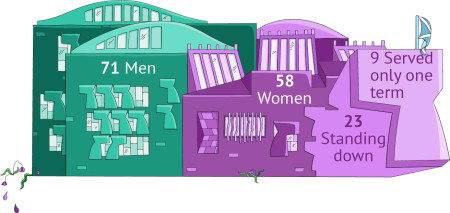 Out of 129 MSPs serving in the Scottish Parliament until March 2026, over a third announced that they would not stand for re- election in May 2026. Of the 40 MSPs who stood down, 23 were women (58%). Women made up 45% of the Scottish Parliament in March 2026. With 23 out of a total of 58 women MSPs standing down, this meant that 40% of women MSPs decided not to run again. Nine out of the 23 women who stood down were elected for the first time in 2021 meaning they served only one term in Parliament.
Understanding why women are standing down from elected office is essential in addressing persistent gender inequalities within democratic institutions and to ensuring that women’s perspectives continue to inform the decision-making that impacts their lives. We surveyed the women MSPs who had announced their intention to stand down to find out what factors were motivating their decision.
5 Reasons for women MSPs to stand down from elected office (from our survey)
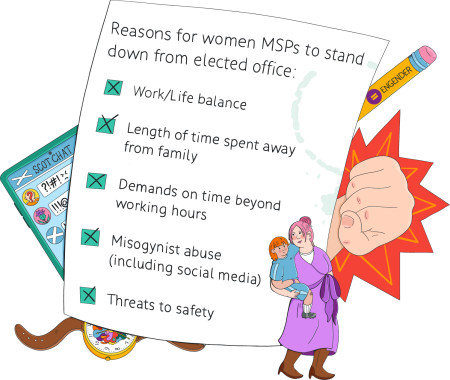 1. Work/Life balance
2. Length of time spent away from family
3. Demands on time beyond working hours
4. Misogynist abuse (including on social media)
5. Threats to safety
Women MSPs told us about their difficulty balancing work with caring responsibilities and the parliament’s lack of offering support to the barriers and misogyny women face on top of the busy lifestyle of a politician. These compounding impacts leave women vulnerable, and ultimately contribute to their decision to quit politics altogether.
Using input from women MSPs and building on work from Engender’s Equal Representation project, our paper contains recommendations for political parties, Scottish Government and the Scottish Parliamentary Corporate Body to increase women’s participation and retention, tackle violence against women, misogyny and abuse in politics, balance family life and work, and build long term culture change.
5 Key Recommendations
-
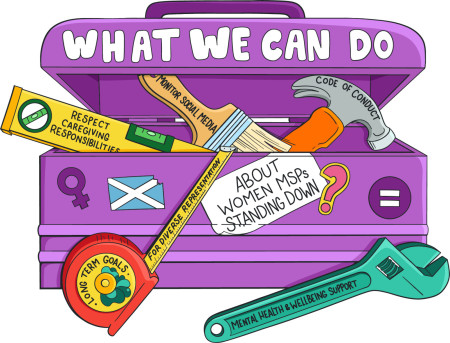 Ensure there is a Code of Conduct and bespoke policies for all members that prohibit gender-based violence and discrimination, and set out clear and transparent reporting processes.
 -
Together with Police Scotland, continue to raise awareness about Operation Ford and increase capacity so that all MSPs are adequately supported in monitoring their social media abuse and violence.
-
Provide access to mental health and wellbeing support for members who have experienced gender-based violence or discrimination.
-
Adapt party structures and ways of working to better accommodate women’s and caregivers’ needs, respecting family and caregiving responsibilities.
-
Agree long-term goals for diverse representation across local council, Holyrood and Westminster elections. Create accompanying strategies to guide work to achieve them. At all levels, foster a culture that takes proactive steps against sexism, racism, classism, ableism, transphobia and other intersecting discrimination.
Read the full paper including all the recommendations for action here.
 RSS
RSSDownloads
 Engender Briefing: Pension Credit Entitlement Changes
From 15 May 2019, new changes will be introduced which will require couples where one partner has reached state pension age and one has not (‘mixed age couples’) to claim universal credit (UC) instead of Pension Credit.
Engender Briefing: Pension Credit Entitlement Changes
From 15 May 2019, new changes will be introduced which will require couples where one partner has reached state pension age and one has not (‘mixed age couples’) to claim universal credit (UC) instead of Pension Credit.
 Engender Parliamentary Briefing: Condemnation of Misogyny, Racism, Harassment and Sexism
Engender welcomes this Scottish Parliament Debate on Condemnation of Misogyny, Racism, Harassment and Sexism and the opportunity to raise awareness of the ways in which women in Scotland’s inequality contributes to gender-based violence.
Engender Parliamentary Briefing: Condemnation of Misogyny, Racism, Harassment and Sexism
Engender welcomes this Scottish Parliament Debate on Condemnation of Misogyny, Racism, Harassment and Sexism and the opportunity to raise awareness of the ways in which women in Scotland’s inequality contributes to gender-based violence.
 Gender Matters in Social Security: Individual Payments of Universal Credit
A paper calling on the Scottish Government to automatically split payments of Universal Credit between couples, once this power is devolved to the Scottish Parliament.
Gender Matters in Social Security: Individual Payments of Universal Credit
A paper calling on the Scottish Government to automatically split payments of Universal Credit between couples, once this power is devolved to the Scottish Parliament.
 Gender Matters Manifesto: Twenty for 2016
This manifesto sets out measures that, with political will, can be taken over the next parliamentary term in pursuit of these goals.
Gender Matters Manifesto: Twenty for 2016
This manifesto sets out measures that, with political will, can be taken over the next parliamentary term in pursuit of these goals.
 Scottish NGO Briefing for UN Special Rapporteur on Violence Against Women
Joint briefing paper for the UN Rapporteur on Violence Against Women.
Scottish NGO Briefing for UN Special Rapporteur on Violence Against Women
Joint briefing paper for the UN Rapporteur on Violence Against Women.

Newsletter
Sign up to receive our newsletter here:
Sign up to our mailing list
Receive key feminist updates direct to your inbox: