Engender blog
All of Engender’s latest news. Reports, reviews, books, articles, and information from across Scotland’s women’s sector.
We would love to hear from other feminists around Scotland. Check out our guidelines for more information on how you can blog for us.
Refugee Women's Strategy Group, Umoja Inc, and Engender launch reports on gender and asylum
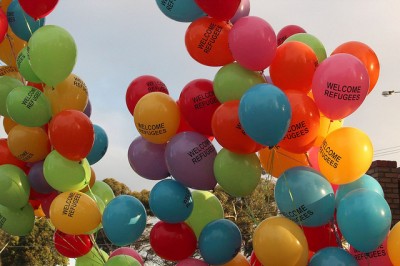
In June 2014 Engender, Umoja Inc and the Refugee Women’s Strategy Group (RWSG) held an event as part of Refugee Week in Glasgow. The aim of this event was to come together to celebrate refugee women in Scotland and launch two pieces of work that seek to capture the experience of asylum seeking women: the RWSG’s Speak for Yourself report and Engender’s briefing paper on gender and the asylum system.
Speak for Yourself is the product of 100 interviews with asylum seeking women. It identifies some of the critical issues that asylum seeking women face, including access to work, education, housing, and health. Women also spoke about the challenge of the asylum process itself.
Indyref, women and the labour market (Indyref Thursday #1)
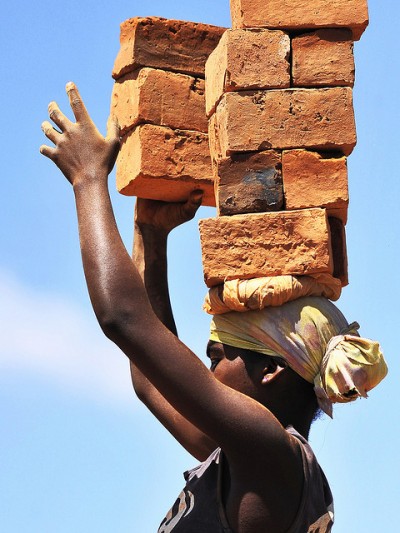
In the run-up to our event on 'gender equality, the referendum and beyond', we'll be publishing a weekly blog to correspond with our 'Scotland's futures' briefing papers series. First up is women and the labour market by Engender's Director, Emma Ritch.
Women in Scotland experience a vastly different workplace from men. Women work in different jobs, earn lower wages, experience the bulk of sexual harassment, have a precarious place in male-dominated organisations and sectors, and are vanishingly unlikely to end their careers around a boardroom table.
The scale of the differences is so enormous as to be almost invisible: it fills the vision of women as they grapple with the everyday ordinariness of balancing work, friends, and family life. The inequalities have developed a different veneer since the 1950s, but many of the changes have been superficial. Some of the key indicators of inequality, like who works part-time, have barely flickered in generations. In some places in Scotland, we’re even recreating the typing pool, as public bodies make ‘efficiency savings’.
Getting to grips with women and work can be a technical minefield, with overlapping policies, sets of statistics, and legal structures in play. So what should we all be thinking about when we cast our ballots on 18 September?
Scottish women's sector welcomes Equally Safe
 A joint statement from Engender, Rape Crisis Scotland, Scottish Womenʼs Aid, Scottish
Womenʼs Convention, White Ribbon Scotland, Womenʼs Support Project and
Zero Tolerance
A joint statement from Engender, Rape Crisis Scotland, Scottish Womenʼs Aid, Scottish
Womenʼs Convention, White Ribbon Scotland, Womenʼs Support Project and
Zero Tolerance
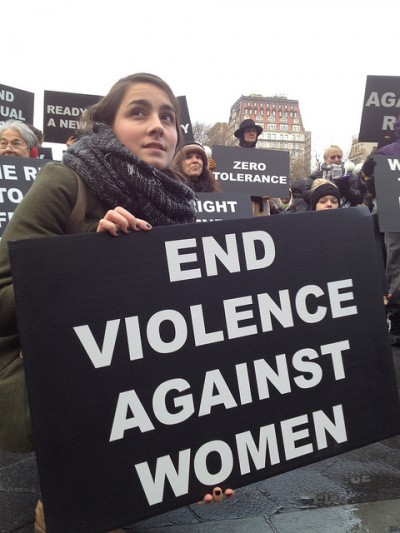
In June 2014 the Scottish Government and COSLA launched Equally Safe: Scotlandʼs strategy for preventing and eradicating violence against women and girls. This statement to welcome Equally Safe has been jointly produced by key voluntary sector organisations working across Scotland to tackle gender inequality and male violence against women and girls. These organisations are Engender, Rape Crisis Scotland, Scottish Womenʼs Aid, Scottish Womenʼs Convention, White Ribbon Scotland, Womenʼs Support Project and Zero Tolerance.
The launch of Equally Safe is an important step in taking forward work to tackle violence and abuse. We welcome the continued commitment to support interventions, as well as the explicit acknowledgement that preventing violence against women is dependent upon reducing gender inequality in the broadest sense. This strategy makes it clear that all sectors of society have a responsibility to actively work towards preventing male violence and that prevention and equality measures must be embedded across all sectors.
Guest post: Indyref - why I'm voting No, thanks
By Talat Yaqoob
What does it mean to be a feminist and be involved in the independence referendum? Well, much like all avenues when you have had the feminist light switched on, you view it through the lens of social justice for women. It is easy for the independence referendum to become all things to all people, the reality of course being that on the ballot paper there is not a question asking whether you want action for women yes or no? It is asking only the question; should Scotland be independent? But naturally for campaigners across Scotland, we want to know whether a yes or a no can get us closer to our campaign aims and a positive future for Scotland. For me, that positive future comes from remaining part of the United Kingdom – and put simply, for the problem of inequality, the solution is collectivism.
Across the UK; every week 2 women die at the hands of a current or ex partner, every 10 minutes in Scotland a woman reports a domestic abuse incident and there is a painfully low representation of women in our parliaments. These are not Scotland specific issues nor are these issue which exist only in the rest of the UK. These statistics and these cases exist across the United Kingdom and I firmly believe the solution is one that will take campaigning efforts and ambition from across the United Kingdom.
Guest post: Indyref - why I'm voting Yes
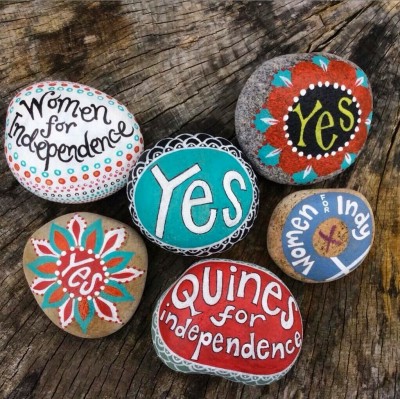
By Kirsty Connell
A Yes vote in the referendum opens the door to a more equal society for Scottish women.
In deciding to vote Yes on the 18th of September, I’m under no illusion that we will suddenly have a Scandinavian-style democracy with decent childcare, lots of bicycles, and someone like Borgen’s Birgitte Nyborg as our First Minister by the 19th of September. But I do believe choosing independence gives us the tools to start building a society that addresses and strives to end gender inequality in Scottish workplaces, wider society and its power structures.
Affordable, world-class childcare is one of the central tenets of Scotland’s Future, the White Paper on Scottish independence. We desperately need a fairer and more affordable childcare system in this country. But childcare is not just an issue for women, and it’s certainly not the only issue for women in this referendum.
 RSS
RSSDownloads
 Engender Briefing: Pension Credit Entitlement Changes
From 15 May 2019, new changes will be introduced which will require couples where one partner has reached state pension age and one has not (‘mixed age couples’) to claim universal credit (UC) instead of Pension Credit.
Engender Briefing: Pension Credit Entitlement Changes
From 15 May 2019, new changes will be introduced which will require couples where one partner has reached state pension age and one has not (‘mixed age couples’) to claim universal credit (UC) instead of Pension Credit.
 Engender Parliamentary Briefing: Condemnation of Misogyny, Racism, Harassment and Sexism
Engender welcomes this Scottish Parliament Debate on Condemnation of Misogyny, Racism, Harassment and Sexism and the opportunity to raise awareness of the ways in which women in Scotland’s inequality contributes to gender-based violence.
Engender Parliamentary Briefing: Condemnation of Misogyny, Racism, Harassment and Sexism
Engender welcomes this Scottish Parliament Debate on Condemnation of Misogyny, Racism, Harassment and Sexism and the opportunity to raise awareness of the ways in which women in Scotland’s inequality contributes to gender-based violence.
 Gender Matters in Social Security: Individual Payments of Universal Credit
A paper calling on the Scottish Government to automatically split payments of Universal Credit between couples, once this power is devolved to the Scottish Parliament.
Gender Matters in Social Security: Individual Payments of Universal Credit
A paper calling on the Scottish Government to automatically split payments of Universal Credit between couples, once this power is devolved to the Scottish Parliament.
 Gender Matters Manifesto: Twenty for 2016
This manifesto sets out measures that, with political will, can be taken over the next parliamentary term in pursuit of these goals.
Gender Matters Manifesto: Twenty for 2016
This manifesto sets out measures that, with political will, can be taken over the next parliamentary term in pursuit of these goals.
 Scottish NGO Briefing for UN Special Rapporteur on Violence Against Women
Joint briefing paper for the UN Rapporteur on Violence Against Women.
Scottish NGO Briefing for UN Special Rapporteur on Violence Against Women
Joint briefing paper for the UN Rapporteur on Violence Against Women.

Newsletter
Sign up to receive our newsletter here:
Sign up to our mailing list
Receive key feminist updates direct to your inbox: