Engender blog
Guest Post: Gen Z, the promise of progress, and the persistence of patriarchy
Against the backdrop of the rise in online misogyny and far-right politics, young women are increasingly concerned about a regression in their human rights. In this guest blog, MSc student Matilda Fairgrieve interrogates Gen Z’s socially active image and shares her perspective as part of a digitally divided generation.
-700.png)
Folk are fascinated by Generation Z and our many nuances.
Media outlets fiercely debate our stereotypes; from digital addicts to digital activists, the generation to which I belong is a subject of collective curiosity.
Public commentary often considers our social conscientiousness, ‘changing the workplace and culture as we know it.’ We are viewed as radical, curious and progressive; seldom are we interrogated further. But are we really this way?
Here, I explore this perception of my generation and alert attention to where assumptions of progressive attitudes demand questions – gender equality.
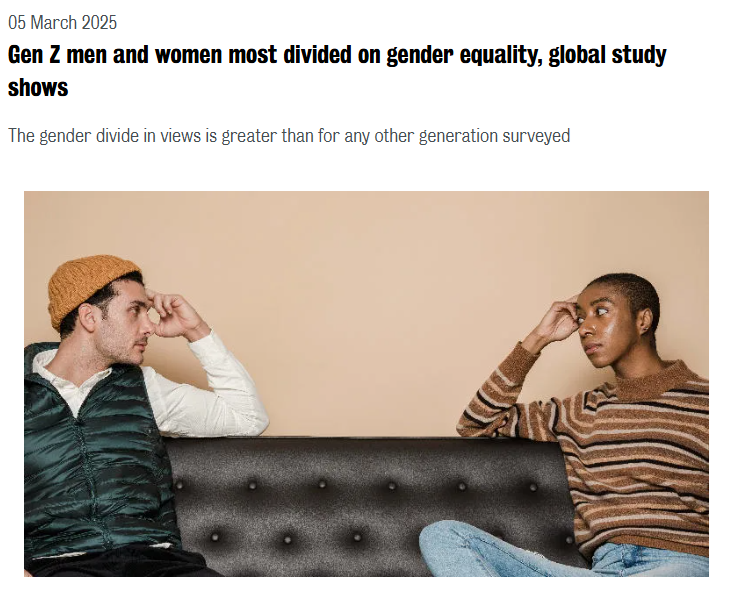 57% of Gen Z men believe women’s equality has gone so far that it discriminates against men. This finding is not in isolation; with another 32% of young men believing gender equality has negatively impacted men. In this context, I position myself among the 59% of my generation who believe there is tension between men and women.
Countless research studies and media outlets will tell you of this “tension” between Gen Z men and women. But how does this tension translate? Trepidation, as Gen Z women ponder these statistics, perplexed. How can it be that such a staggering proportion of young men we share space, workplaces and relationships with hold these views? Despite our disbelief in the percentages, there is no doubt about the problems and pain we’ve experienced as a result. A society entrenched in unequal power, from underrepresentation in politics and leadership, persistent gender pay and pension gaps, disproportionate burden of care as the norm and the violence against women and girls (VAWG) epidemic.
Intergenerationally, there is some difference in how men and women identify as feminists. However, Generation Z’s Millennial, Gen X, and Baby Boomer counterparts are not nearly as divided on the overarching importance of gender equality. Could Gen Z simply grow out of this divide? Debatable when contemplating the socio-cultural realm Gen Z grew into.
Gen Z: The distinct divide
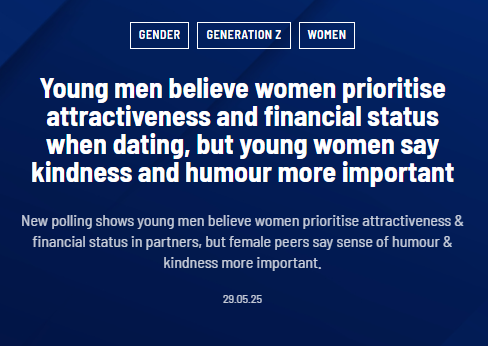 Unique to Gen Z’s divide is the danger lurking in the digital. It is no coincidence that a generation of men aged in a media-fuelled weaponisation of masculinity are threatened by gender equality. Research correlates the self-assessed importance of masculine identity with lower support for gender-equitable policy. Disconcerting political support compounds disconcerting narratives held by young men. Misogynistic and even incel ideologies have crept into dominance, such as 53% of young men believing women are only attracted to a “certain subset of men.”
As manipulative media actors exploit tensions, isolation among young people is accelerating. 19% of young adults reported having no one they can count on socially. The most digitally connected generation exists in a remarkably distrusting, detached state.
While digitally destructive shifts did not shape the playgrounds of Gen Z’s infancy, I’d argue that a physical shift in our playgrounds set a precedent for disconnect. Gen Z’s early 2000s upbringing coincided with the introduction of Multi-Use Games Areas (MUGAs) in public parks. Open outdoor spaces, a place for equal play, became unprotected from gender roles and division, with boys making up 90% of MUGA usage.
My friends and I shared a similar sentiment to that uncovered in research: “there is nothing stopping us going through the gates of MUGAs, but we don’t feel we should.” From divided children to digital teens – the trajectory of gendered socialisation for Gen Z was fundamentally different.
Reflecting on our unique transition into the digital age with little protection, Gen Z women and I question what this means for present gender equality. With real-world implications of misogynistic digital narratives in corporate and political fields already evident, the time to ask is now.
Building bridges to connect: Real-world gender equity
 If Gen Z’s polarisation is a partial result of our upbringing, there is hope for progress in remedying social disconnection and in intervening with the voices that use it as a weapon. Without minimising the complexity we face, the courage to connect and build a bridge rather than a wall certainly feels like a place to begin.
Of course, bridges must be built from primary prevention. While the ideological divide of Gen Z men and women may have been digitally fuelled, it was made possible by the root cause of gender inequality. The grip of misogynistic media would not be so tight in a gender-equal, real world.
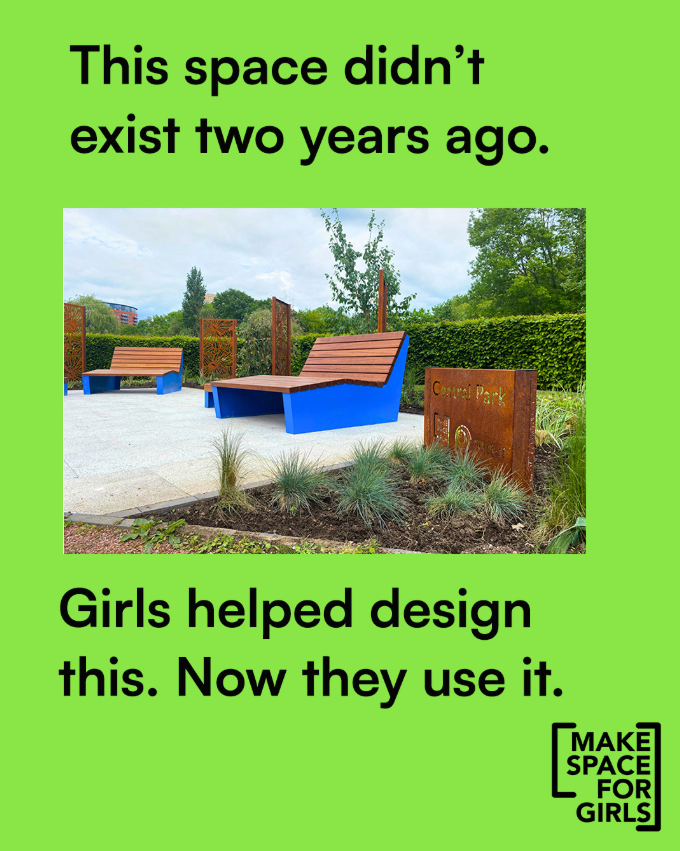
It is promising to see primary and secondary prevention work picking up much-demanded acceleration in Scotland through initiatives such as the Equally Safe at School and Equally Safe at Work programmes, both shaped by a gendered understanding of the root cause of VAWG. Inspiring work to rectify early disconnects is on the rise, too, with the Make Space for Girls campaign ensuring gender mainstreaming in public spaces for play.
However, the current division between Gen Z men and women requires additional tertiary prevention, acknowledging that these attitudes are already abundant.
To my fellow Gen Z men and women, I’d like to meet outside of the digital world. In-person dialogue, focused on listening to lived experiences and restorative approaches to harm, moving from individual fear to collective security.
Do so with enough meaningful intent, and I’d like to believe our perceived progressive nature will not require interrogation. Building a bridge, together, that serves not only to connect once again, but provide an exit pathway from polarisation and a route to a gender-equitable future.
This guest blog was submitted by Matilda Fairgrieve (she/her), a Gen Z intersectional feminist and MSc student in Political Communications and Public Affairs, inspired by the drive to grow into a gender-equitable future in Scotland.
Guest posts do not necessarily reflect the views of Engender, and all language used is the author’s own. Bloggers may have received some editorial support from Engender, and may have received a fee from our commissioning pot. We aim for our blog to reflect a range of feminist viewpoints, and offer a commissioning pot to ensure that women do not have to offer their time or words for free.
Interested in writing for the Engender blog? Find out more here.
Share this post on …
Comments: 0 (Add)
 RSS
RSS
Newsletter
Sign up to receive our newsletter here:
Sign up to our mailing list
Receive key feminist updates direct to your inbox: