Engender blog
All of Engender’s latest news. Reports, reviews, books, articles, and information from across Scotland’s women’s sector.
We would love to hear from other feminists around Scotland. Check out our guidelines for more information on how you can blog for us.
Why we need better data collection to improve women’s representation
We’ve written to the Minister of State for Women and Equalities, Annelise Dodds MP, calling on the UK Government to enact Section 106 of the Equality Act 2010.
-600.jpg)
Access to robust, intersectional data on the protected characteristics of our elected representatives is vital in ensuring high-quality democracy. Without this information, it’s very difficult to map the causes – or create solutions to – the chronic underrepresentation of women – especially Black & minoritised women, disabled women LBT women, and young women.
Although the legal framework exists to require parties to track the diversity of their candidates and representatives, very little reliable data is publicly available. What information we do have is inconsistent and poorly documented, making it hard to see progress over time or take steps to improve representation.
Section 106, which has never been put into effect, would require political parties to collect and publish basic equality data. Enacting it would give us much better insight into the demographics of our representatives, and help us take the action needed to improve women’s representation at all levels of politics.
Read the full letter here.
16 Days of Activism Against Gender-Based Violence
Amplifying Marginalised Perspectives Through Journalism and Storytelling
Migrant Women Press have launched a powerful new initiative dedicated to raising awareness about the specific and often overlooked challenges faced by migrant and ethnically diverse women victims/survivors of gender-based violence.
We are sponsoring this campaign, held within “16 Days of Activism Against Gender-Based Violence” from the 25th of November to the 10th of December. The project will amplify voices and stories too often left out of mainstream narratives, aiming to foster greater understanding, empathy, and change.
16 stories will be shared—one each day during the 16 Days of Activism—authored by migrant and ethnically diverse women journalists and authors from diverse backgrounds and countries. Each piece will explore how factors like class, race, gender, immigration status, disability, and nationality intersect to increase these women’s vulnerability to violence. Additionally, stories will highlight prevention strategies and propose solutions for combating gender-based violence.
Vital pieces released so far include:
- East and/or Southeast Asian women survivors remain excluded and unsupported in the UK
- From Newsroom to Exile: The Hidden Costs of Being an Indian Woman Journalist
- The impact of the UK’s housing crisis on black and minoritised survivors of gender-based violence
- Why Won’t The UK News Media Call Femicide A Public Health Crisis?
Follow along with all posts from Migrant Women Press on their website here.
-1600.png)
3 Steps to Achieving Primary Prevention in Public Transport
We’ve launched our new series of mini-briefings shining a spotlight on how to achieve a primary prevention approach in different areas of public policy with this new briefing highlighting why safe and accessible public transport is key to gender equality and preventing violence against women.
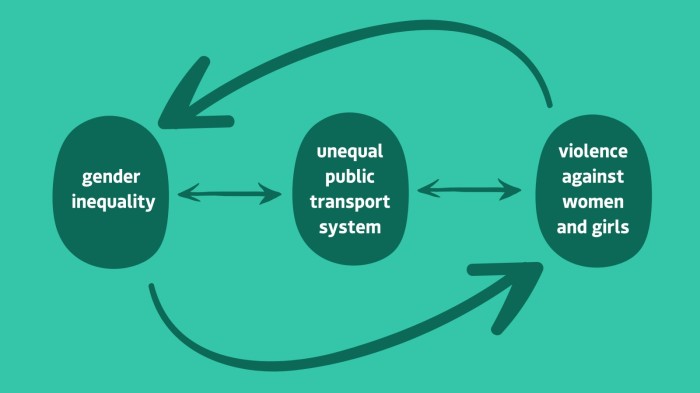
Public transport isn’t just a matter of convenience; for many women, it’s a lifeline that opens doors to education, employment, and essential services, all of which impact gender equality.
However, Scotland’s public transport system fails to serve women’s distinct travel needs, limiting their access to these opportunities and reinforcing gender inequality. Without changes, these limitations keep women from fully participating in society, impacting everything from their financial independence to safety and personal well-being.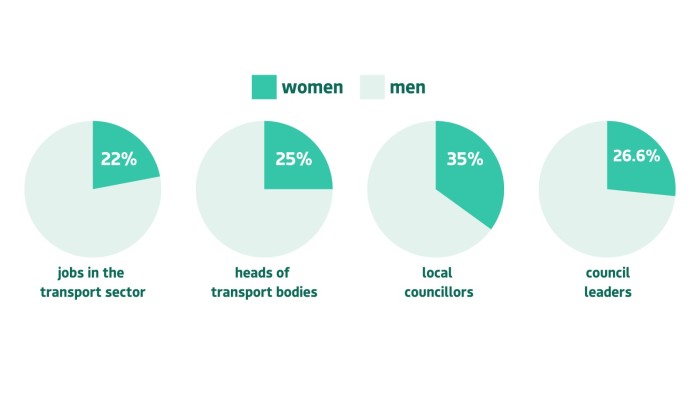
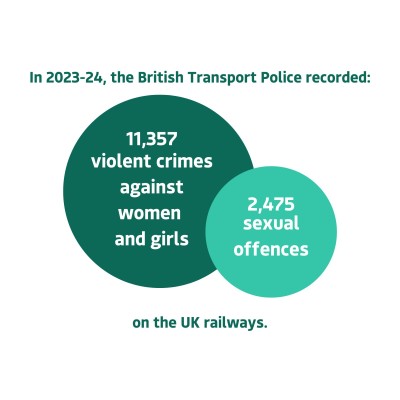 When we talk about primary prevention of VAWG, we’re talking about preventing this violence from happening in the first place. Evidence shows the best way to do this is to tackle the root cause of this violence: gender inequality. Therefore, creating a safe, sustainable and accessible public transport system for everyone is essential for advancing women’s equality and preventing VAWG once and for all.
Without safe and accessible transport options, women’s access to critical economic and social opportunities is limited, reinforcing gender inequality, which ultimately enables VAWG. Women’s safety on public transport remains a significant concern and barrier to women’s mobility, due to things like lack of regular and reliable services, design of vehicles and transit points, and insufficient staffing levels.
Our new briefing highlights Three Steps Towards Achieving a Primary Prevention Approach in transport Policy
1. Women are equally and fairly represented in policy-making roles
- Improve pathways for women, particularly minoritised women, into the transport sector and career progression opportunities
- Ensure inclusive working environments in the transport sector by implementing flexible working procedures, anti-discrimination and harassment policies and women’s leadership initiatives
2. Policymakers consistently apply intersectional gender analysis in their work
- Collect intersectional gender-sensitive sex-disaggregated data on women’s travel patterns, safety and satisfaction
- Conduct Equality Impact Assessments at the outset of transport policy development to ensure this informs policy and planning decisions at all stages
3. Policymakers mainstream primary prevention in all areas of their work
- Increase opportunities for co-designing transport strategies with women, especially those with lived experience of VAWG on public transport
- Embed women’s safety considerations into transport planning, including in decisions on service provision, the design of infrastructure and staffing levels
Find out more in our new briefing here and follow us on social media to get the latest news on other briefings in the series on housing and planning, coming soon!
Invitation to Tender, Development of Engender’s Strategic Plan 2025-2030
We are seeking a consultant(s) to work with us to deliver a strategic review and planning process that will result in the development of Engender’s next Strategic Plan 2025-2030. This process will help us focus our efforts and resources on securing the most impactful change for women in Scotland. To do this, we must engage with a diversity of women and identify priorities that work for the most marginalised. Undertaking this process now will help us ensure that our organisation is in a strong position to respond to future challenges.
The review process will help us identify our key strengths, impacts, emerging opportunities, and areas for development. The findings will inform and shape a new Strategic Plan for Engender for 2025-2030.
Please find all the details and how to apply, here.
Broken and biased: new report shows impact of housing emergency on women
A new report published today by Shelter Scotland and Engender shines a light on the disproportionate impact of the housing emergency on women, and the additional barriers they face in accessing safe, secure, affordable, housing.
The report, released on Challenge Poverty Week’s Housing Day, shows that the higher rates of poverty among women and their greater reliance on social security benefits restricts their access to housing, with barriers being particularly pronounced for minoritised women.
It also sets out that homelessness services in Scotland are often unequipped to respond to women’s specific needs, particularly those fleeing domestic abuse. Women’s caring responsibilities and concerns over safety also create additional requirements for the type of temporary homeless accommodation that they need to access, which local services too often fail to meet.
Calling for action to address the housing emergency from a gendered perspective, the report makes a series of recommendations, including:
- Improve women’s access to safe, secure, and affordable homes by increasing the supply of social housing.
- Changes to social security to tackle women’s economic inequality, including the establishment of a ‘fund to leave’ for women experiencing domestic abuse.
- Adopting a gendered approach to the allocation and supply of temporary accommodation, taking particular account of women’s needs with regards to gender-based violence and childcare responsibilities.
- Investment in research and improved data collection to ensure women’s homelessness, including those with no recourse to public funds, is better understood and not ‘hidden’ from official monitoring.
The report argues that decades of underinvestment in social homes combined with years of austerity has created a housing system which is not only broken but biased as well.
Shelter Scotland Director, Alison Watson, said:
“This report sets out in the clearest terms the specific and disproportionate harm done to women by the housing emergency.
“Following on from the devastating homelessness figures published recently, the report is a timely reminder that Scotland’s housing system is not only utterly broken, but also biased as well.
“We know that when it comes to housing councils are breaking the law on an industrial scale, denying support to those who need it and are entitled to it; for a woman fleeing domestic violence the consequences of being turned away could be utterly catastrophic.
“Childcaring responsibilities are also far more likely to fall to women, so growing child homelessness will of course have a hugely disproportionate impact on women in Scotland.
“Scotland’s housing emergency is devastating the lives of women every day; every level of government has a responsibility to act and to heed the recommendations in this report.”
Engender’s Executive Director, Catherine Murphy, said:
“Our report with Shelter Scotland demonstrates the multiple barriers that our current housing system stacks in front of women, and the shocking ways it ignores their specific needs, pushing women into cycles of poverty and instability.
“The situation is even worse for women dealing with multiple layers of inequality. BME, disabled, and refugee women, lone parents, and those with caring responsibilities, often face relentless difficulty in securing stable housing.
“The official homelessness statistics tell us only a fraction of the story, as they fail to capture the complexity of women’s experiences, leaving them ‘hidden’ from our understanding of the problem.
“The recent pilot fund for women experiencing domestic abuse is a positive step, but it barely scratches the surface of what’s needed to address the housing emergency women face.
“Any serious response to Scotland’s housing crisis must start with acknowledging the deep gender bias in the system and taking targeted action to improve women’s access to safe, secure, and affordable homes.”
You can read the full report here, and come along to our joint webinar on 31st October to find out more about the action required to address the housing emergency from a gendered perspective. Book your free place here.
 RSS
RSSDownloads
 Engender Briefing: Pension Credit Entitlement Changes
From 15 May 2019, new changes will be introduced which will require couples where one partner has reached state pension age and one has not (‘mixed age couples’) to claim universal credit (UC) instead of Pension Credit.
Engender Briefing: Pension Credit Entitlement Changes
From 15 May 2019, new changes will be introduced which will require couples where one partner has reached state pension age and one has not (‘mixed age couples’) to claim universal credit (UC) instead of Pension Credit.
 Engender Parliamentary Briefing: Condemnation of Misogyny, Racism, Harassment and Sexism
Engender welcomes this Scottish Parliament Debate on Condemnation of Misogyny, Racism, Harassment and Sexism and the opportunity to raise awareness of the ways in which women in Scotland’s inequality contributes to gender-based violence.
Engender Parliamentary Briefing: Condemnation of Misogyny, Racism, Harassment and Sexism
Engender welcomes this Scottish Parliament Debate on Condemnation of Misogyny, Racism, Harassment and Sexism and the opportunity to raise awareness of the ways in which women in Scotland’s inequality contributes to gender-based violence.
 Gender Matters in Social Security: Individual Payments of Universal Credit
A paper calling on the Scottish Government to automatically split payments of Universal Credit between couples, once this power is devolved to the Scottish Parliament.
Gender Matters in Social Security: Individual Payments of Universal Credit
A paper calling on the Scottish Government to automatically split payments of Universal Credit between couples, once this power is devolved to the Scottish Parliament.
 Gender Matters Manifesto: Twenty for 2016
This manifesto sets out measures that, with political will, can be taken over the next parliamentary term in pursuit of these goals.
Gender Matters Manifesto: Twenty for 2016
This manifesto sets out measures that, with political will, can be taken over the next parliamentary term in pursuit of these goals.
 Scottish NGO Briefing for UN Special Rapporteur on Violence Against Women
Joint briefing paper for the UN Rapporteur on Violence Against Women.
Scottish NGO Briefing for UN Special Rapporteur on Violence Against Women
Joint briefing paper for the UN Rapporteur on Violence Against Women.

Newsletter
Sign up to receive our newsletter here:
Sign up to our mailing list
Receive key feminist updates direct to your inbox: