Engender blog
“We can’t win here with someone who looks like her”: How we’re working to tackle barriers and improve women’s representation in politics
As part of Engender’s work on equal representation, we’re sharing this look into our recent research on women’s experiences in politics and how parties in Scotland are using positive action measures.
-700.png)
We know that the political arena is becoming increasingly hostile for women, and particularly marginalised women.
This year, we’ve released in-depth research into women’s experiences of political candidacy and the effect of positive action measures on women’s representation at all levels of our political system, and the findings are clear: women continue to face barriers and abuse as political candidates, and parties must take action to get more women elected.
Women’s underrepresentation means women’s voices and vital perspectives are pushed to the margins in politics. Here, we’re taking a moment to reflect on the stories, research, and voices that have shaped our work on women’s experiences in Scottish politics and how parties are utilising measures to increase women’s representation.
 Navigating women’s political journey
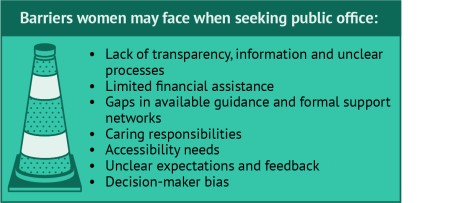
Our Women’s Political Journey report laid bare the challenges women face at every stage of the political process, from deciding to stand, through vetting and campaigning, to life after election. Over 150 women shared their experiences of political candidacy with us in surveys and interviews, and the findings were stark: over 70% of respondents reported experiencing online harassment or trolling, and only 11% felt “very safe” during their campaign.
Sexist bullying, tokenistic attitudes toward positive action measures, and a lack of equalities monitoring continue to undermine progress. Disabled and minoritised women are particularly at risk, and many are left questioning whether politics is a space where they can truly belong. To see at least 50% women in our parliaments, it’s clear that we need to see a real culture change in ground-level politics first.
Read the full report here.
What it’s like to be a woman in politics
Alongside our research and report, we reached out to women from across Scotland’s political landscape, who shared their experiences of candidacy, campaigning, and politics in their own words. These interviews offered powerful testimonies highlighting frustration with biased systems, the need for resilience in the face of challenges and abuse, and hope for women’s representation in our next parliament and beyond.
-400.png) Kirsteen Sullivan MP spoke candidly about the steep learning curve of entering Parliament:
Kirsteen Sullivan MP spoke candidly about the steep learning curve of entering Parliament:
“It’s very daunting to become an MP—nothing can prepare you for it. You need sharp elbows.”
She reflected on the importance of representation, especially for working-class women and young girls who rarely see themselves in politics.
Sally Donald, a candidate for Holyrood 2026, highlighted the joy of connecting with voters and the barriers faced by neurodivergent women:
“If we don’t have autistic people in parliament, we can’t make politics for them.”
Cllr Laura Murtagh from Falkirk, shared her journey balancing motherhood and politics, and the gendered expectations that persist:
“Nobody asks the man how he can manage politics while having kids.”
She reminded us of the strength found in women’s support networks and the need to stand firm in the face of negativity.
Cllr Fatima Joji from Aberdeenshire, spoke about the weight of intersecting identities and the lack of safe reporting mechanisms for abuse:
“If you feel like you don’t see a person like you—be the first.”
You can catch up with these videos offering a unique lens into the lived realities of women in politics online here.
What works in getting more women elected?
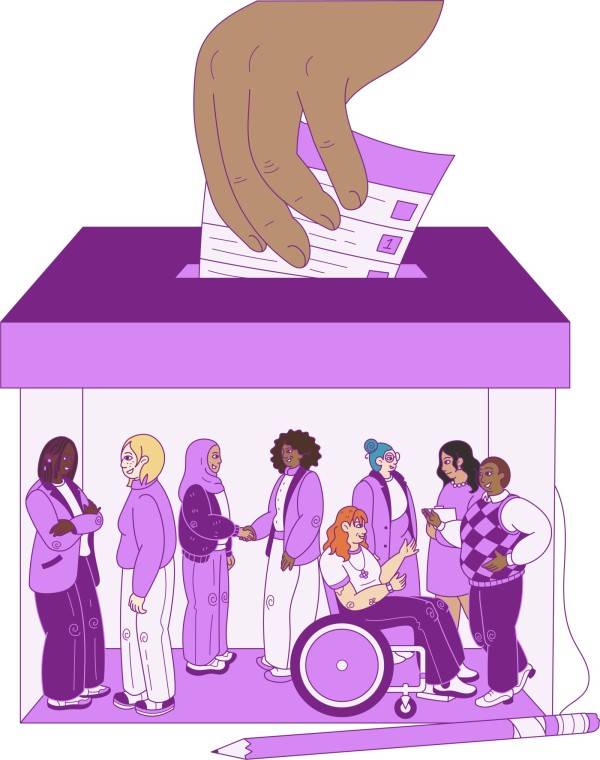
Our research has shown that the political journey for women is stacked with obstacles, but we’ve also explored how Scottish political parties use quotas and positive action measures for women’s representation. Our Beyond Promises report shows that consistent use of these tools leads to better representation, but also that tokenism, cultural resistance, and lack of intersectionality continue to hold us back.
Drawing on data from three election cycles, data shows that consistent use of positive action measures correlates with higher levels of women’s representation. In 2021, women made up 45% of MSPs - the highest in Scottish Parliament history - largely due to quota use by some parties. However, no party has achieved gender parity across all levels of government, and the underrepresentation of Black and minority ethnic, disabled, and younger women remains stark.
Read the full report here.
 How to remove barriers and improve women’s representation
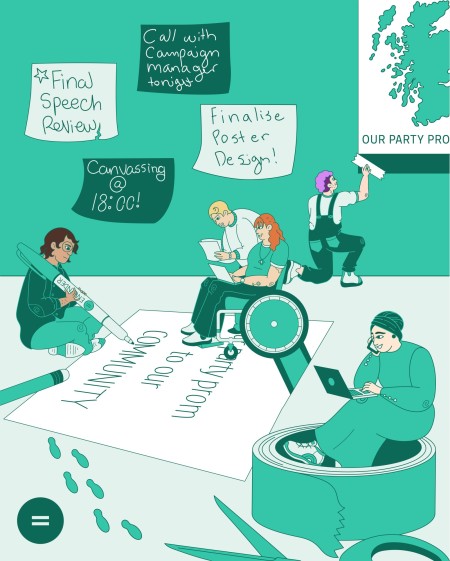
We know that greater diversity at all levels of politics in Scotland enriches policy decisions and improved democracy, benefitting everyone. We’re urging political parties, governments, councils, and other stakeholders to implement measures and commit to equal and diverse representation, including:
Enacting Section 106 of the Equality Act, obliging parties to publish candidate diversity data.
Committing to long-term strategies on quotas and positive action measures across election cycles, focusing on winnable seats for women, including at local authority level
Making accessible information available about all aspects of candidacy and elected office
Working to build a party culture that takes pro-active steps against sexism, racism, classism, ableism, transphobia, and other intersecting discrimination.
Exploring ways to include minoritised, disabled, and intersectional groups in strategies around positive action measures.
We need your support to engage politicians and decision-makers and demand action on equal representation. The upcoming Holyrood elections in 2026 and local elections in 2027 are a critical opportunity to create meaningful change in selection and election processes to see gender equal representation become a reality.
We’ll be working with women across Scotland and the UK to continue to call for the change we need to improve women’s representation, so watch this space for how you can get involved and take action.
Share this post on …
Comments: 0 (Add)
 RSS
RSSDownloads
 Standing Down, Speaking Out: Why women MSPs are leaving Holyrood and how we fix it
This new paper forms part of Engender’s Equal Representation in Politics Project, which aims to help create a Scotland where women, in all their diversity, are sustainably represented in politics.
Standing Down, Speaking Out: Why women MSPs are leaving Holyrood and how we fix it
This new paper forms part of Engender’s Equal Representation in Politics Project, which aims to help create a Scotland where women, in all their diversity, are sustainably represented in politics.

Newsletter
Sign up to receive our newsletter here:
Sign up to our mailing list
Receive key feminist updates direct to your inbox: